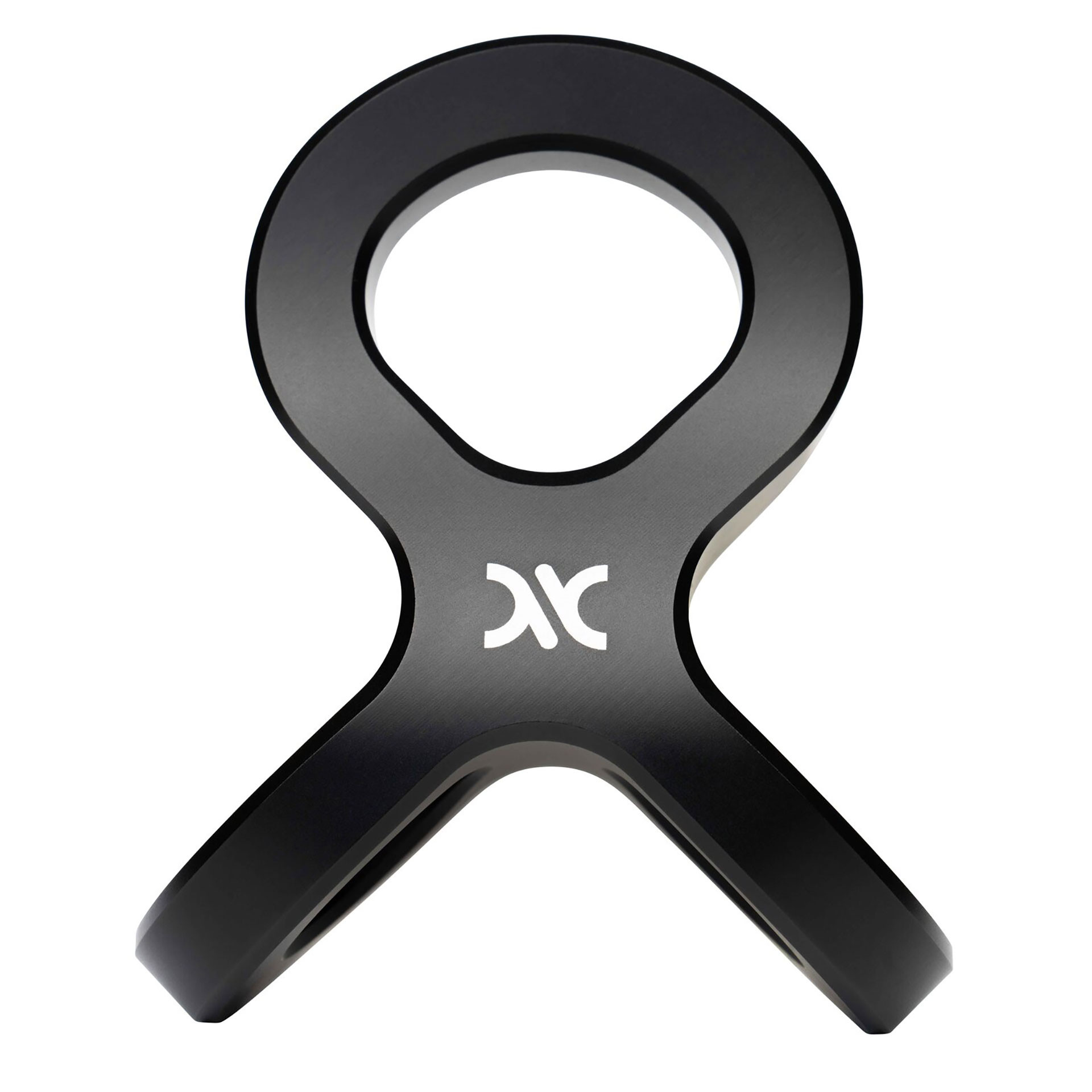
SQUID streamlines the rigging of redundant load-sharing systems. The SQUID’s attachment points are compatible with a wide range of connection methods and they position rope hardware for easy loading and unloading while connected. SQUID naturally orients toward the load and lets components move freely, reducing the risk of binding and shifting in the event of anchor or line failure. Strong and compact, SQUID is a versatile tool for TTRS, litter bridals, cross hauls, and more. SQUID is CE marked, classified to NFPA General Use for specific configurations including TTRS, and classified to NFPA Technical Use when the secondary points are pulled directly apart from each other.
Note: textile breaking strength may be reduced when directly connected to the SQUID. See test data using the link at the bottom of this page.
Features
- Multi-planar rigging plate with perpendicular attachment points
- Optimizes device alignment for twin tension rope systems (TTRS)
- Enables single operator control for better shared tension
- Promotes smooth loading / unloading of connected hardware
- Allows components to move freely and orient toward the load
- Reduces shifting / extension in the event of line or anchor failure
- Aligns secondary points for high strength and easy load sharing
- Supports a variety of connection methods for versatile rigging
- Provides large collection points for building redundant systems
- Primary attachment point fits two (G) or three (T) carabiners*
- Secondary attachment points fit one (G) or two (T) carabiners
- Simple and solid aircraft grade aluminum with no moving parts
- Strong, compact, and lightweight for multiple applications
*More carabiners may fit in the SQUID attachment points depending on the type of carabiners, applied loads, and rigging practices involved. Care should be taken to avoid binding, wedging, or other geometric restraints.
Certifications
NFPA
GENERAL USE (G) MBS 45 KN (10,116 LBF) – SPECIFIC CONFIGURATIONS*
TECHNICAL USE (T) MBS 27.7 KN (6,227 LBF)
CE
PPE-R/RFU 11.114 VERSION 01